Archive for the ‘Uncategorized’ category

Crunch That.

September 19th, 2011

Over the past few years, I’ve stopped doing the 10 minutes of abdominal work at the end of every bootcamp hour that I was taught to lead when I started years ago.  Here’s why:

crunches don’t get you much.

Core strength is important, of course. But you’ll strengthen your core anyway when you are doing other exercises with proper form!

(I think everybody loves crunches during bootcamp since that’s a time I’ll let them lie on their backs!)

I’m pasting in a portion of a discussion below, taken from a continuing education provider that has given me loads of great information.  The article points to several studies that
were published in the New York Times last monthIt’s worth a gander if you care about your core strength!

Are Crunches Worth the Effort?

When researches at Indiana State University began research on strength of core muscles vs athletic performance, the results were not what they expected. The thinking was that those with sturdy cores would perform better on physical performance tests. However, the results showed otherwise. But don’t give up on those core exercises yet.

While Indiana States results were not expected, other studies have shown novice runners do benefit from stronger cores. Those with better core strength were able to
reduce their 5K running time.

While studies vary across the spectrum on whether strong cores help with performance, what is known is if you train for your sport, the core strength will come. So what
does this mean for us? Avoid performing dozens of crunches. In fact, 6-8 good quality crunches a few times per week are best. Perform them correctly by maintaining the natural curve of the spine and lift only enough to feel the first bit of contraction. And remember, we all have a “6-pack,” but some of us need to reduce the body fat.
Unlocking Medical Mysteries

September 16th, 2011

I don’t think seeing a doctor should involve emotional discomfort.  I know it absolutely does, but that doesn’t mean I don’t want to fight that.

Yes, I think that’s at least a quadruple negative right there.

Yesterday I saw my family practice doctor and we were talking about a few things and I realized how uncomfortable I was.

Uncomfortable, as I sat fully clothed on a crackly piece of paper on a table I had to climb up onto and she sat two feet below me and typed on her computer.

So I interrupted myself and asked if she minded that I sit in the chair instead.

Her response was the best: Yes of course; this is a conversation.

See; she gets it.  She understands that when it comes to my health, I am the expert and she is a consultant.  Not to undermine her education or experience or knowledge in any way at all… but not to undermine my education, experience or knowledge either.  We were having a conversation.

It was a good thing, and I’m glad I was able to say and do what I said and did. 

I’m on a writing roll here today aren’t I.

(Green underline there since I didn’t put a question mark!)

Anyway, while she was out of the room I made my obligatory tour of the surfaces of the room.  (What can I say.)  I found a sheet of paper that had some information that I don’t know if you will recognize.

On the off chance you don’t, I’m listing them here.  The medical world isn’t meant to be so confusing; it is just big (huge) and they use codes and you can end up feeling lost before you even are allowed through the door.

I think we all deserve better than that.

So here are diagnosis codes your doctor uses when they see you.  They need to use at least one diagnosis code (called an ICD-9 code) for any medical procedure code (called a CPT code) they use to (hopefully) get paid by your insurance company. There are big books of codes that change every year, so doctors usually have one sheet of paper that includes their most typical codes to make things faster as they zoom from room to room and patient to patient.

For diabetes:

250.0… type 2 diabetes, non-insulin dependent, not stated as uncontrolled

250.1… type 1 diabetes, insulin-dependent, not stated as uncontrolled

250.2… type 2 diabetes, non-insulin dependent, uncontrolled

250.3… type 1 diabetes, insulin-dependent, uncontrolled

And then there are more!  Each specific complication has its own code, or way of coding.

250.5x(0-3 above) and 362.01 is diabetes with retinopathy

250.6x and 337.1 is diabetes and neuropathy

250.7x and 440.20 is diabetes and peripheral vascular disease

250.4x and 583.81 is diabetes and nephropathy

250.8x and 405.99 is diabetes and hypertension

250.8x and 272.4 is hyperlipidemia

Some codes have 5 digits and some have 4.  Usually the 4 digit codes are for the general diagnosis with the fifth digit getting more and more specific.

It’s pretty interesting from a coding point of view (which may be about the most boring thing ever if you don’t care about it) but I think anyone with a chronic disease like diabetes really should know the basics of this stuff.

It’s a way to take charge.  As my Dr. Joe would say, it’s your time!!

Real People, Real Life, and CDES

September 15th, 2011

My talk to the CDEs (Certified Diabetes Educators) yesterday about Diabetes & Exercise was kind of interesting.  I mean, I spent a long time talking about myself so of course it was the most riveting talk anyone has ever attended.  (HA!)

What I found interesting was how many people there were (1) used to discussing type 2 diabetes and very excited to switch over to a discussion of type 1 and (2) had no idea how exercise works in real life when it comes to diabetes.

Real life.

Yep.  Hard to escape it!

One lady started asking me my background as I was setting up; she assumed I was another CDE and seemed surprised I am not.  I assured her I was plenty qualified to discuss diabetes—24 years of constant experience will do that!

As we got into it, I got some great questions from the group.  Some wanted to know if I eat before I work out. (not really)  Some couldn’t figure out how I can check as I run. (very carefully, or I’ll walk)  Some wondered if I take my meter with me on every run.  (nope)

Real life.

I ended up checking during the talk, as I was standing at the front of the room.  I didn’t notice I don’t think that I was checking so much, but omg one of them apparently timed me from start to finish (I did take a correction bolus).  She was
excited that it took me 40 seconds to do it all.  (I was a little weirded out that someone timed me.)

I am now that person that she’s going to tell a future patient about.  She’ll be sitting with someone complaining about how much time diabetes takes and she’s going to say “no; it takes 40 seconds.”  (Sorry about that one, if you’re the patient on that one!  That seems so annoying when others do it to me and I truly apologize.)

They all seemed flabbergasted that I could check and continue with my activities simultaneously.

Um, I do it all the time.

Real life.

When they were warmed up, they started firing questions at me about more specific types of exercise.  It was fun to fire questions right back at them about other factors I involve in my decisions before/during/after I work out: heat, workout intensity, food today, food yesterday, elevation changes, insulin on board, temporary basals, etc.  Then I’d tell them what I would do and I’d tell them about what I would expect.

Real life.

I told them about one of my clients whose blood glucose wasn’t what I expected at the end of a workout.  (I expected 110  and she was 155.)  I asked her if she had set the temp basal for 30 minutes like we had discussed.  She said she had set it instead for an hour.

Timing affects a lot.

These are the kinds of things it takes a lot of experience to manage.  It takes that constant vigilance.  It takes a lot of trial and error and a load of strips.

But the funny thing is, it is all so worth it for what you get in return.

Real life.  LIVING with diabetes.  Life.

Awesome.

I KNEW IT!!!

September 14th, 2011

I think I had maybe two phrases that carried me from about age 2 to age maybe 16 (when I promptly added the obligatory third phrase involving driving):

ONE: if my sister can do it why can’t I do it too [because she’s older than me]

TWO: WHY. CAN’T. WE. HAVE. A. DOG.

I’ve never gotten over either one of them, quite frankly.

But this study would have made me even more preposterous on that second issue.  (The dog issue.)  Every time my parents wanted me to go out and stop irritating them or otherwise entertain myself I could have shown them the results of this study, and explained to them how important exercise is for kids.

It would have been AWESOME.

Researchers studied 618 pairs of adolescents (12.5-17.5 years old) and parents for about 18 months to get the data.  They looked at how active the kids were on a daily and weekly basis.

The families with dogs in their homes and lives were much more active, and correspondingly I presume healthy, than those without a pet in their home.  (The study mentions dogs in particular and pets in general so I do too.)

See?  ANIMALS ROCK.

It wasn’t necessarily that the kids were in charge of walking the dog (I mean for real how often does THAT happen).  It was the fact that the dog was around that got people off the couch to feed, water, clean up, open the door, close the door, find the ball in the backyard, throw the ball, hide the leash, bend down to pet, bend down to scoop and bag, kneel to hug, crouch to defend against love attacks, dry off with a towel after the sprinklers went on at the new time, and on and on and on.

I’m telling you:  We all, every single one of us living with and those living without diabetes need to be as active every single moment of every single day as we can manage.

If we get a bunch of CRAZY FUZZY LOVE at the same time, we score bigger than a rock star.  No joke.

So who’s going to adopt a new fitness friend?!  Let’s go, Mom and Dad!!  I’m ready!!

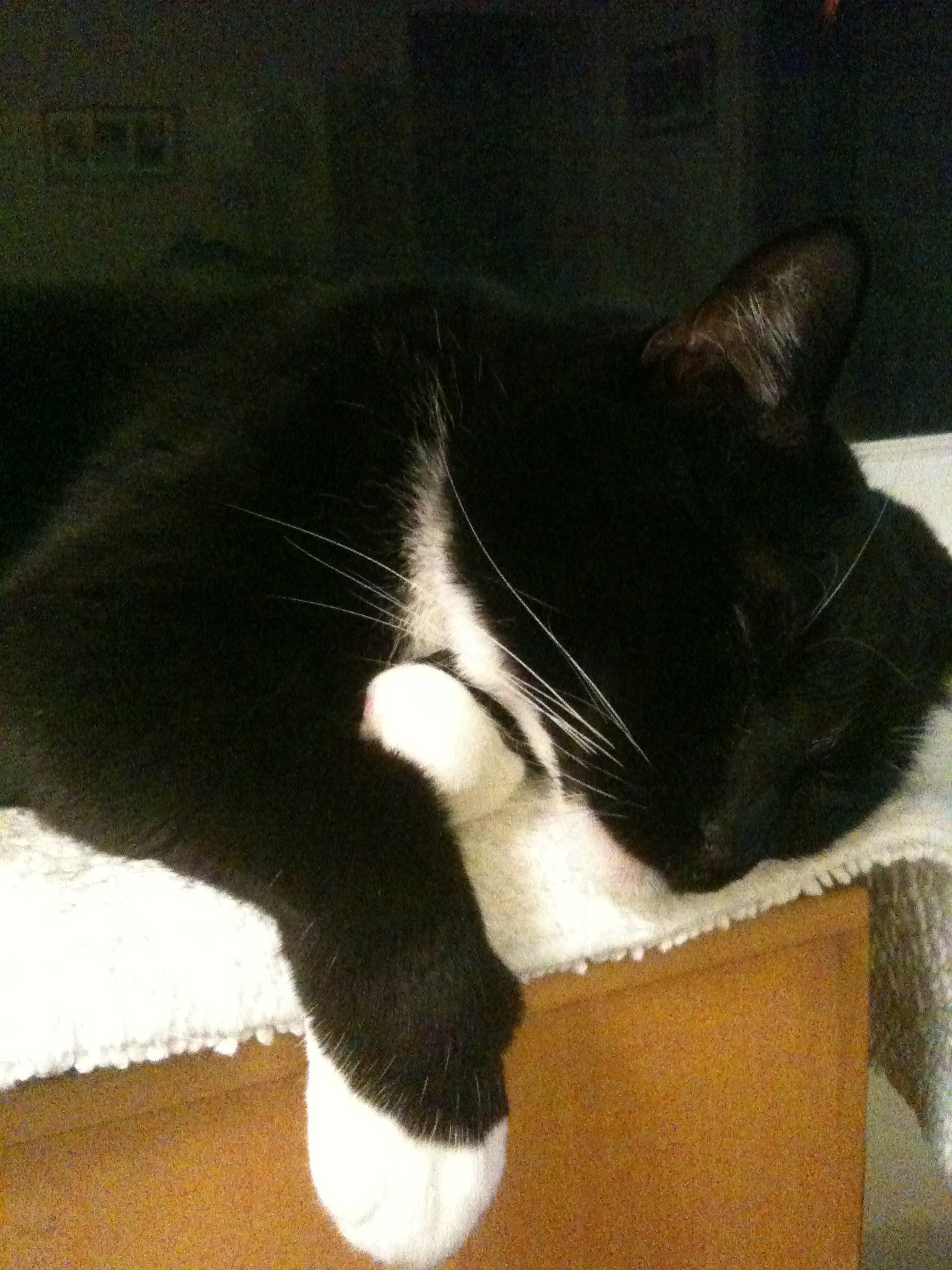
She doesn't look like she would make me more active... but she does!! (on one of her white mats!)

(I also must be completely fair and say that my cats get me off the couch just as much as I think a dog would.

They chase each other and crash into things and I need to go check what broke.  They want dinner.  They want breakfast.  They want to see who is doing something outside and they look so curious that makes ME curious too.  Gracie will see us coming and race to a white mat and expect to be petted on that mat.
George will jump onto the bed and want to be brushed.  Yes, we cater to them.  Yes, they have us convinced we wouldn’t have it any other way.

We are so lucky!)

Go Climb A Glacier

September 13th, 2011

My family seemed to vacation only at national parks when I was a kid.  I swear we were always driving to one park or another.  (At least for a squirmy kid like me, it felt like that: drive, drive, drive, set up the tent, deal with bugs, spend an hour with the camp stove, deal with bugs, go up a hill, go faster down the hill, deal with bugs, repeat.)

My favorite national park tee shirt said “GO CLIMB A GLACIER”.  I wasn’t old enough to come up with other words the shirt alluded to, but I got the gist and loved the fact my parents let me wear it anyway.

Sometimes, it really is all about the tee shirt.

But OTHER times, it’s about the National Parks!

The Journal of Forestry came out with a great set of facts on National Parks. They say that each year more than 170 million people visit national forests for recreation. And the physical activity associated with these visits burns 290 billion food calories. That equals enough french fries laid end to end to reach the Moon and back – twice.

How awesome is that?!

They looked also at what people do when they visit a National Park.  They said that hiking, walking, downhill skiing, fishing, relaxing, camping, and driving for pleasure are among the primary activities accounting for about two-thirds (68 percent) of all visits to the national forests.

What else is there to do at a national park?

Oh.  S’mores.  Of course!  I forgot.  (How could I forget S’MORES?!)

I love the fact I lived in a national park for three summers when I worked at Bearskin Meadow CampThat’s the kind of experience you just never get out of your bones or blood.  (Nor should you.)

The whole topic makes me want to visit a national park as soon as I can.  Maybe I’ll even climb a glacier when I’m there!

INSULIN!

September 12th, 2011

A lot of people, at least with type one diabetes, say they don’t have a functioning pancreas.  That isn’t entirely true.  Our pancreas serves to produce several necessary things: insulin, of course, and digestive enzymes and various other hormones.  So for those of us with type one, it’s our beta cells that live in the land of those “Islets of Langorhans” that we’re missing.

It sounds almost like a place found at Disneyland, that Land of Langorhans.

Almost.

At the cellular level, insulin grabs glucose and helps transport it into the cells.  If you’re like me, you learned this about thirteen thousand times in the four days you were in the hospital at your diagnosis: insulin is the key that unlocks the doors to your cells so that your body can use the food it eats.

Yup.  The key.   INSULIN IS THE KEY!

But then there is that other, much less discussed, function that insulin serves in our bodies.  Insulin doesn’t just help your body use glucose. 

Nope.

It essentially helps your body store fat, too.  THAT one I only learned a couple of years ago.

THAT one I would have liked to have known a long time ago.

Insulin doesn’t do anything with the fats themselves, but it can serve to prevent the BREAKDOWN of your already-stored fat.

WHAT A BUMMER.

So it’s important to keep yourself on as little insulin (be it self-made or self-injected insulin) as possible.  One way to do that?  Why, remain as insulin-sensitive as possible!

How can you do that?  Two primary ways: (1) don’t need as much insulin to cover the food you eat (keep away from those big boluses to cover high-glucose spikes) and (2) EXERCISE to keep your cells happy and burning glucose as quickly as possible.

Exercise is awesome for more reasons that I can list in my “less than 500 words/blog” goal.  BUT, one of the reasons is that exercise helps to activate glucose transport… to me, in my life, that means that my insulin becomes SUPERCHARGED when I do cardiovascular exercise, or a weight training circuit that keeps my heart rate elevated.  (Love that supercharge!)  I simply don’t need as much insulin in my body.

If you exercise long enough to decrease the amount of glycogen stored in your liver, you ALSO get to replace that for the next day or so… my husband reminded me last week that I tend to go low the night after a half marathon.  (I’ll have to remember that next time.  I mean, I’ll have to remember that this Sunday because I have another half then!)  If I planned
better for it, it’d be like FREE EATING a little.

Hey, you’ve got to get it while you can.

(It’s also good to know that everything changes AFTER you’re done with a bout of exercise.  If you’ve had a lowered basal
rate, you may need to take a little bolus to cover a blood glucose climb.  Additionally, you need more insulin immediately after a strength workout to shift amino acids from protein into muscle cells where they can be used for muscle growth and repair.  It’s complicated, as you know.)

INSULIN ROCKS even if it’s complicated and challenging and makes those of us who have to manage our levels externally sometimes want to pull our hair out.

No matter what, I still like it.  Life really sucked when I didn’t have any insulin.  This way is MUCH BETTER.

Don’t you agree?

Taking a VACATION?!

September 1st, 2011

While I cannot take a vacation from my diabetes or its continuous monologue… I CAN take myself on a vacation WITH my diabetes.  So I’m going!

I’ll be running the Kauai Half Marathon on Sunday and then lazing around on the island for the remainder of the week.  We might do a bike tour, might take a sunset cruise, and may just do nothing at all.  (How great is that?!)

Aloha!!!

Poor Little Mousies

August 31st, 2011

This one caught my eye because, well, it’s about exercise and heart disease.  Need I say more?  But then I read the article and they talk about mice having heart attacks.

See, this is why I’m not a fan of school.  They try and teach you one thing and you spend the next three days seeing poor little mousies in their little cages with their little wheels having little teensy tiny mouse heart attacks.  And by the time the little code reds or code blues or gee maybe it’s code cheese for mice then I’ve completely lost track of what I am supposed to be paying attention to.

Tell me I’m not the only one who does this.

ANYWHO, so the point is not at all about mice or mousies or little teensy hearts or little
wheels (that in my mind always squeak; do they really always squeak?).  It’s about ONE OF THE BEST BENEFITS OF EXERCISE EVER.

Nope, it isn’t being able to fit in my clothes.

It’s PREVENTING HEART DISEASE.

This is sort of new news because this particular study didn’t just re-prove that exercise helps prevent heart attacks… it was able to come up with reasons why, when mice exercised for four weeks, they were (1) protected from coronary heart blockage, (2) had less heart damage if they did have a heart attack, and (3) were protected in the same ways for 1-4 weeks after they stopped their exercise program.

(See, I’m back to smiling at the thought of little mousies being on exercise programs.  I can see the little mouse exercise instructor with a clipboard and towel around her neck in front of all the wheels, cheering the little exercising mousies on.  It’s amazing I get  anything accomplished in my day.)

It all comes down to the endothelial nitric oxide synthase present in the mousies’ bodies when they were exercising.   The more nitric oxide available in your body to help you out during a heart emergency, the better your chances of survival because nitric oxide helps dilate blood vessels and increase blood flow… exactly what your body needs if you are experiencing a heart attack.

I’m still stuck on the poor little mousies.  Do they feed them poor food choices to have a sufficient sample size of heart attack prone little mice?

I’ll have to go for a run and think about it.

Lucky for me, I can run on the ground and spare myself the squeaky wheel.

To Continue The List of Healthy Options to Feel Good About

August 30th, 2011

I just love that Prevention magazine somehow came up with a percentage by which these changes can improve your health.  I’m betting they have similar percentages for health improvements for taking stairs versus elevators, drinking coffee versus tea, and maybe even crossing the street on a flashing “do not walk” sign.  (Okay probably not that one.)

It’s precisely the kind of article that keeps me buying magazines.  Full of short, fun ideas that just might work.  On this list (there were only 12 on the original list so this is it) my favorites are: 8, 9, and 12.  Which ones look good to you?

7. Keep your doctor on speed dial

Health boost: Slash medical mistakes up to 25%

Don’t assume that no news is good news when you’ve had a checkup: Physicians fail to inform 1 out of every 14 patients whose abnormal test results are clinically significant, according to a recent study published in the Archives of Internal Medicine; among some doctors, the number of no-calls was as high as 1 in 4.
Delayed diagnoses can be linked to thousands of serious injuries and health crises—and even deaths—each year.

“If you are subjecting your vein to a needle, you have a right to know what the test is for and why it matters,” says Katz. Talk with your doctor about when you’ll hear about results, and if she finds something that requires treatment, when you might expect to hear from her again. You can always follow up with her after that date.

8. Squeeze your [spouse]’s hand

Health boost: Slash stress by 200%

A brief hug and a few minutes of holding your {spouse]’s hand can fend off stress, according to a study reported at the American Psychosomatic Society. Researchers asked two groups of participants to speak about a stressful event, an exercise that typically causes a spike in blood pressure. BP readings of those who did so without holding their spouse’s hand before speaking were more than double those of people who held hands; their heart rates also rose twice as much.

9. Strike a warrior pose

Health boost: Ease back pain by 56%

Spending time on a yoga mat can significantly reduce chronic lower-back pain, according to a study from West Virginia University. Researchers  asked 45 people whose back pain caused mild to moderate disability to do a 90-minute yoga workout twice a week for 6 months. Compared with patients who only continued whatever therapy they’d already been doing, the new yogis reported significantly less pain and better function and fewer symptoms of depression (down almost 60%). They also continued to see these benefits even 6 months later.

10. Grill some fish for dinner

Health boost: Lower risk of dementia by 19%

More evidence that fish is brain food: A study of nearly 15,000 adults  worldwide found that regular fish eaters (those who have it more than once a week) were just one-fifth as likely to have dementia as those who never ate the food. It also found that those whose diets contained the most meat were slightly more likely to have dementia than non-meat eaters. Omega-3 fatty acids (found in oily fish like salmon, mackerel, and tuna) may help protect nerve cells in the human brain and are known to limit inflammation, which is associated with dementia.

11. Drink milk at breakfast

Health boost: Shed 5 pounds

Women who consumed a large (20-ounce) glass of fat-free milk in the  morning ate, on average, 50 fewer calories at lunch, compared with days when they drank fruit juice with the same number of calories, according to a study published in the American Journal of Clinical Nutrition. Researchers say the milk drinkers felt more satisfied and were less likely to overeat at their next meal. Over a year, that translates to a 5-pound loss.

12. Pour a glass of Pinot

Health boost: Live 5 years longer

A Dutch study following 1,300 men for 40 years found that those who regularly drank up to a half glass of wine each day boosted their life expectancy by half a decade, compared with teetotalers. Study authors say the polyphenolic compounds in wine (especially red) may have heart-healthy effects that are probably seen in women as well. “Alcohol raises levels of ‘good’ cholesterol and can increase levels of tPA [tissue lasminogen activator], a protein that helps break down blood clots; both benefits can help minimize potentially life-threatening ailments such as stroke and heart disease,” says Katz. But remember, because even modest alcohol intake is associated with an increased risk of breast cancer, if you are a social drinker, keep your daily intake low—no more than one glass per day (men can have up to two).

You Just Never Know

August 29th, 2011

I’m in love with this information. I really, truly am.  For me, it helps to  explain a few questions I’ve had rattling around in my brain for quite some time.  (Not that there was just the one question… every single answer I find gives me just a smidge more peace!)

I think I’ve blogged on this one before: the NEAT principles?  NEAT = Non- Exercise Activity Thermogenesis.  (Pretty sure I mentioned my dad lecturing me on thermodynamics?)

Anyway, this is just PRIMO INFORMATION HERE, if you ask me.  This is the kind of information that I think should change people’s lives.  (I think it has already changed mine a little.)

It’s information about the differences between structured exercise and regular, what I would consider largely thoughtless activity.

Turns out, and it’s weird for me to say this, but it isn’t always about the structured exercise we do. A lot of our calorie burn (15-50%) comes from our Non Exercise Activity.

One group looked at 16 non-obese participants and purposefully overfed them 1,000 calories each day for 8 weeks.  That is 56,000 calories!  3,500 calories = 1 pound… so that means the researchers fed these poor participants the equivalent of SIXTEEN POUNDS’ worth of calories.  SIXTEEN POUNDS.  (Would YOU sign up for that one?!  Didn’t think so!)  The study participants were pretty much supposed to keep their structured exercise consistent as it had been prior to the study.

Some of the participants gained only 3 pounds.  Some gained 15.8 pounds.

Why the difference?

It comes down to NEAT.  Those who naturally increased their daily activity as a result of the increased calories were the ones to gain the least amount of weight.  They seemed naturally resistant to weight gain. (How cool would THAT be.)

How did they manage that impressive feat?  It’s NEAT.  They worked just a bit harder to maintain their posture.  They walked up the stairs just that much faster.  They probably stood up when chatting on the phone.  They fidgeted.

Maybe it’s a good thing to have ants in our pants.

Who knows, but it just may make a huge difference.